The Blockchain Academy partnered with Go DiiVE to develop and co-host a three-week Blockchain Summer Bootcamp aimed at both local and international university students and recent graduates looking to gain critical technology, innovation and business skills that organisations are looking for and to understand how to facilitate impact in the global community. The bootcamp took place at ABSA South Africa’s Innovation Lab, Work in Progress in Cape Town.
The objectives of the 3-week Blockchain Bootcamp for students were to:
- Develop a strong understanding of what blockchain technology is and why it is disruptive
- Understand how blockchain is transforming business and society
- Learn the functioning of cryptocurrencies, including opening accounts, trading and analysing them
- Be exposed to the algorithms and principles underlying the implementation of blockchains in concrete applications
- Explore the use of smart contracts
- Introduction to code smart contracts in Solidity language
- Understand the use and potential of decentralised blockchain applications (Dapps)
- Apply coding skills to go through examples of designing applications
- Building skills such as empathy, adaptability, systems thinking, collaborative and hyper-collaboration.
The Bootcamp
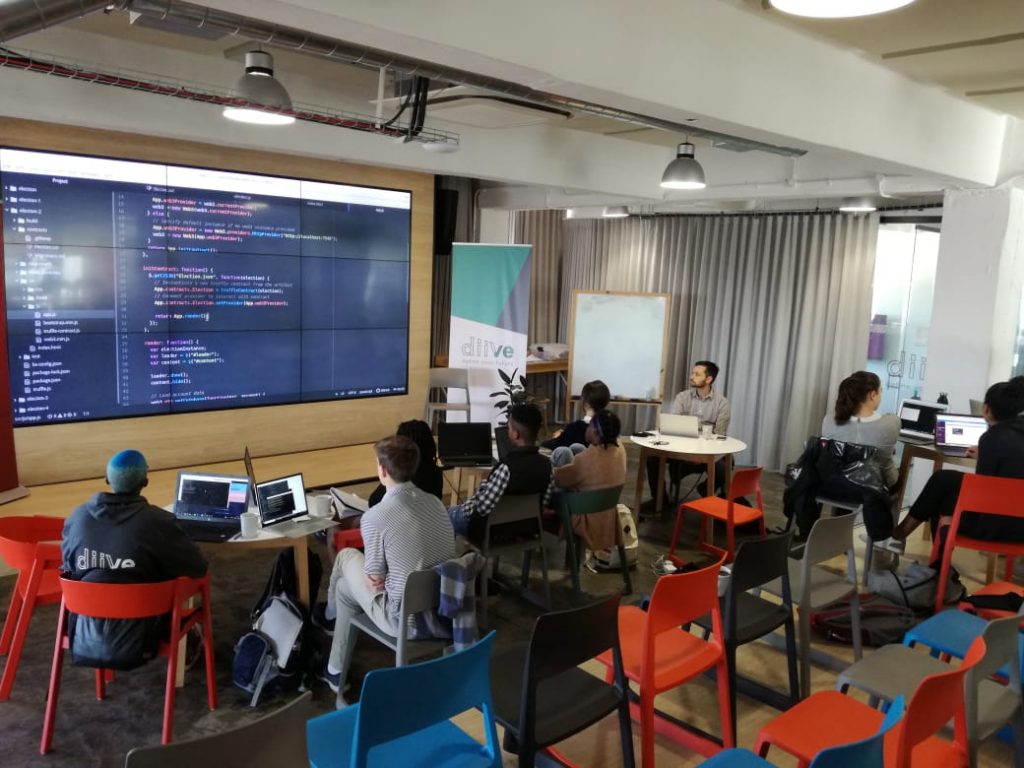
The mornings consisted of intense, fast paced learning about blockchain technology, while the focus shifted to practical applications of the theory in the afternoons. The students were eager to learn and their majors (mostly computer science) allowed deep diving into the proverbial blockchain rabbit hole.
The general theme was around enablement of financial inclusion. During the course of the bootcamp the students were tasked to create their own digital identity, hash it and store it on the Bitcoin blockchain. The students were able to validate each other’s identities and used it as a KYC mechanism to open simulated bank accounts and apply for dummy visa’s. “Regulators” checked for compliance, based on the reputation of the validators. Students then created a token on Ethereum to be used as an incentive tool in the decentralised identity system.
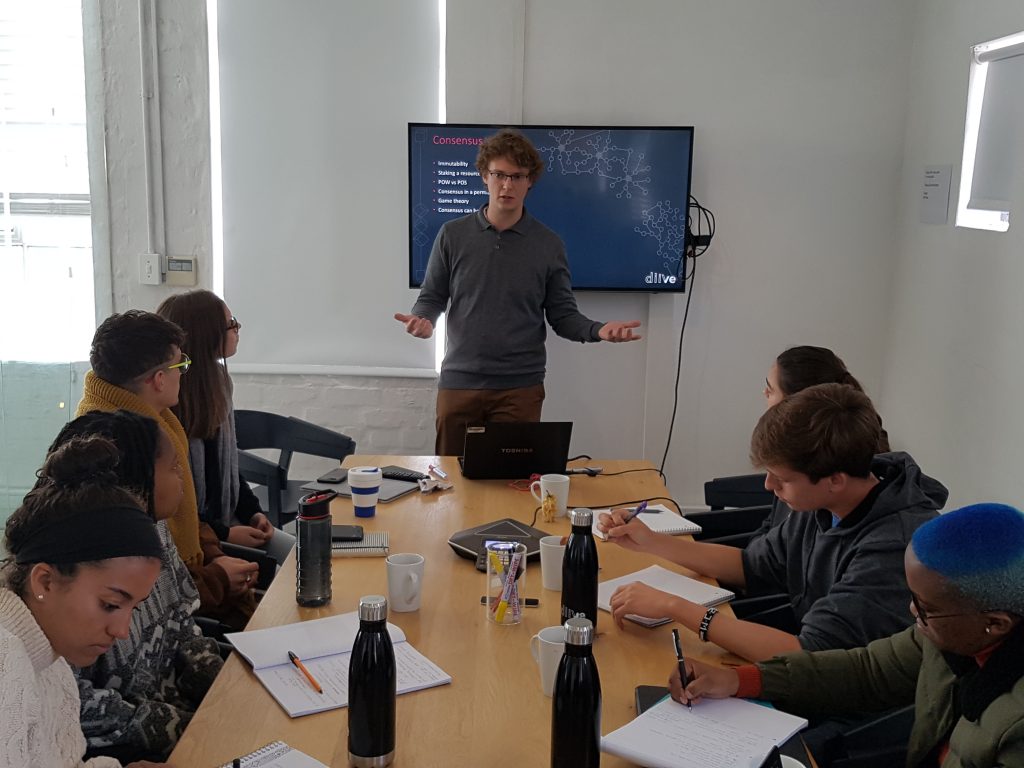
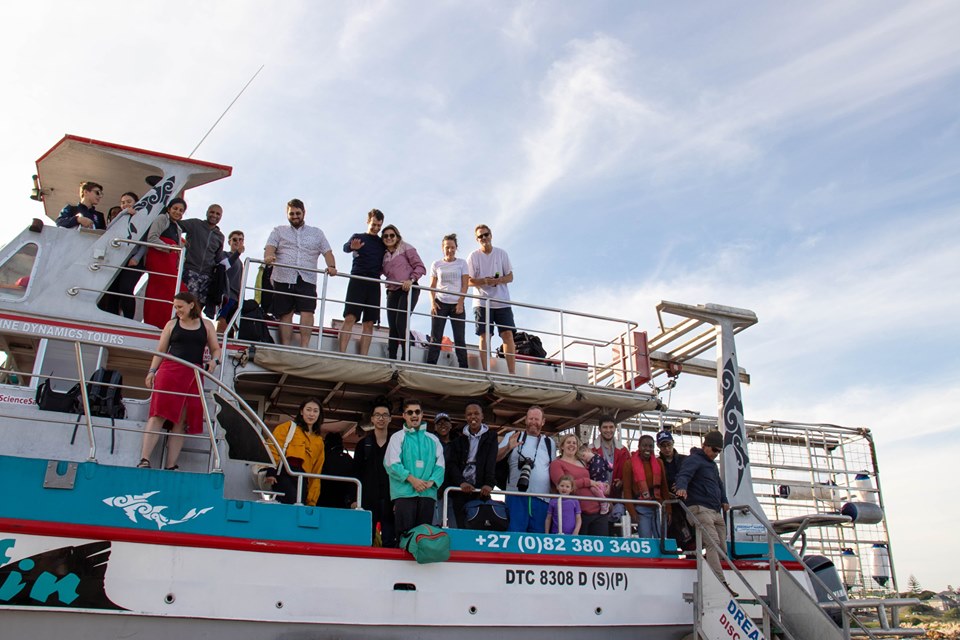
The afternoons were reserved for teaching the students softer skills. Several industry experts visited the students to speak about business, entrepreneurship and leadership. The students also had opportunities to engage with South African based blockchain startups such as Xago, The Sun Exchange, Nona, Omniscient, Wala, Linum Labs and Coil to name a few. Fun activities were also included in between the training such as shark cage diving, paragliding, wine tasting and cooking lessons in Khayelitsha!
The 3-week bootcamp ended with a mini-hackathon in which the students’ abilities were tested by identifying a problem and designing a blockchain solution. Their presentations were nothing short of mind-blowing. They were given five hours to design the smart contract architecture and user interface (UI), develop a business case, code a part of the backend and present everything to a panel of judges. The first group developed a decentralised marketplace for second-hand goods with built-in escrow services and protection for both the buyer and seller. A reputation token allowed for resolving disputes. The second group designed a decentralised stokvel that could also act as a crowdfunding platform for non-profit organisations. They would also have an ERC20 token facilitating the process and their technical presentation was brilliant.
The Students
They came from all over the world including the universities of Harvard, Boston, St Andrews, Cape Town and Johannesburg. They all had two things in common: ambition and an eagerness to learn about this amazing technology. Their energy was contagious and lots of fun was had while learning.
The Blockchain Academy and Go DiiVE Blockchain Bootcamp was a whirlwind of activity. Digital bootcamps, cultural immersions, leadership development, purpose coaching and a whole lot of fun! Have a look at some highlights of the first 2 weeks.
With the bootcamp and innovation sprint components of the program now done and dusted, check out what went down!
What the Academy’s instructor, Carel de Jager, had to say:
“The bootcamp was one of the best experiences I have ever had. I fell in love with Cape Town, and the beautiful setting of WIP overlooking Table Mountain and the Harbour was amazing. The team at Diive is very good at what they do and we are really privileged to have partnered with them.”
]]>
In such a scenario, it becomes imperative to stay aware of what financial institutions are currently doing with this technology and the possible use cases and case studies of this innovative technology specifically for financial institutions. In an effort to facilitate the successful adoption and integration this technology, UMS Conferences, in association with Blockchain Academy, has launched a Master Class on Blockchain for Financial Institutions.
The Blockchain Academy’s presenter, Carel de Jager, explored topics such as centralised vs. decentralised blockchains, use cases and opportunities for financial institutions, bitcoin compliance and regulation. The training was attended by some of the leading financial institutions in Oman such as Central Bank of Oman, Ahli Bank, Alizz Islamic Bank, Bank Muscat, Meethaq and Al Shirawi Group UAE (Oasis Investments) among others.
Founded in 2015, UMS Conferences is a wholly owned subsidiary of UMS International, a multinational media company and publisher of Bloomberg Businessweek Middle East. Alpana Roy, Executive Vice-President at UMS Group said the initiative is aimed at equipping the finance sector with the knowledge of latest technologies.
]]>]]>
The Blockchain Academy is proud to announce its collaboration with The Field Institute. The Field Institute delivers cutting-edge programmes that assist organisations and individuals with their digital maturity and future fitness.
Under the agreement, The Blockchain Academy is partnering with The Field Institute to design and deliver courses focused on highlighting and emerging the relevance and practical application of cryptocurrencies and blockchain technology.
Collaborative teaming exercises and engaging discussions with digital thought leaders will ensure that attendees are able to think about the utilisation of these emerging technologies in their specific world of work. The Field will host participants at immersive site visits to companies that are developing these technologies or making use of them to create business value.
The Blockchain Academy hopes to empower individuals and organisations with the necessary blockchain and cryptocurrency skills and knowledge to embrace the technological revolution and shape the strategies of the future.
It is crucial that the workforce adapts to the future by adopting new technologies and systems of thinking.
Through this partnership, The Field Institute hopes to leverage The Blockchain Academy’s highly regarded and powerfully current course content and its team of experienced facilitators to deliver innovative courses that ensure leaders develop a better understanding and appreciation of blockchain technology in order to harness the potential to thrive in the digital age. greater comfort with blockchain, and its application, and use this extraordinary technology to thrive in the digital age.
Watch the highlights of the first Blockchain Bootcamp held in Johannesburg in May 2018 below.
]]>The Blockchain Academy’s first training session with Anglo African and its clients (which include regulators, government institutions, banks, insurance and offshore companies in the FSI) will take place in Mauritius from 2-3 August 2017.
These two days of interactive sessions will cover:
– The basics of cryptocurrencies and blockchain technology
– The different types of blockchains such as Ethereum, Bitcoin and Ripple
– How Distributed Ledger Technology is being used by companies such as R3CEV and how it differs from traditional blockchain technology
– How financial institutions can use blockchain technology to innovate and leverage its key characteristics of security, immutability, transparency, speed, cost effectiveness and efficiency across many use-cases varying from trade finance, capital markets, settlements and clearing, payments, correspondent banking, and many more.
The Blockchain is a digital ledger of economic transactions and can be programmed to record virtually everything of value and importance, such as: birth and death certificates, deeds and titles of ownership, financial accounts, votes, provenance of food, and anything else that can be expressed in code.
The financial services industry has been keeping a close eye on blockchain technology that can record and authenticate every transaction without a bank or broker as a third party, and without sharing any personal information.
The possibilities of blockchain technology are endless. Any industry that deals with transactions can and will be disrupted by this technology. Rather than the Internet of Information, this is the Internet of Value or the Internet of Money.
]]>